Artificial Intelligence (AI) agents have become integral to many aspects of our daily lives, from virtual assistants like Siri and Alexa to sophisticated recommendation systems used by platforms such as Netflix and Amazon. One of the most fascinating aspects of AI agents is their ability to learn and adapt their behavior based on user interactions and feedback. This adaptability is crucial for improving user experience, enhancing efficiency, and increasing engagement. In this exploration, we will delve into how AI agents learn, the methodologies they employ, and the implications of their adaptive behavior.
1. Foundations of Learning in AI Agents
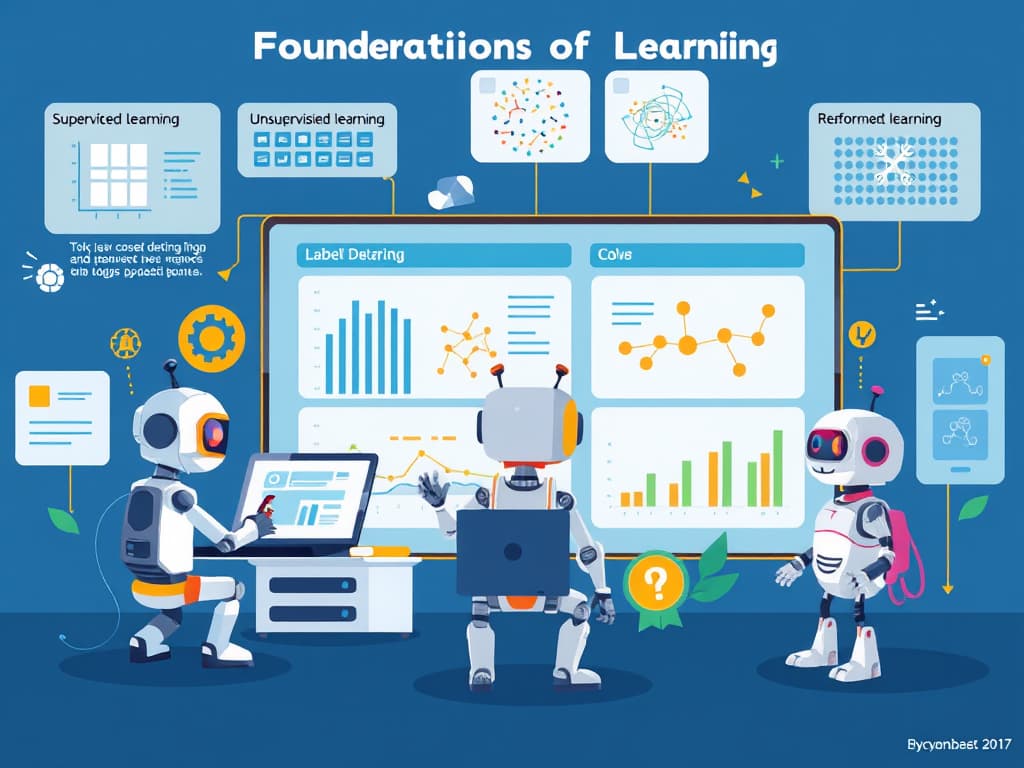
AI agents primarily learn through two methodologies: supervised learning and unsupervised learning.
Supervised Learning involves training an AI model on a labeled dataset, meaning that the model is given input-output pairs. For instance, an AI agent designed to recognize images of cats and dogs would be trained on a dataset containing labeled images. The model learns to associate specific features in the images with their corresponding labels, allowing it to make predictions on new, unseen data.
Unsupervised Learning, on the other hand, deals with unlabeled data. The AI agent tries to learn the underlying structure of the data without any specific guidance. For example, clustering algorithms can group similar items together based on their features, which is particularly useful in recommendation systems.
2. Reinforcement Learning: The Key to Adaptation
Reinforcement Learning (RL) is a subset of machine learning that has gained popularity for training AI agents to adapt based on user interactions. In RL, an agent learns by interacting with its environment, receiving feedback in the form of rewards or penalties. The agent’s objective is to maximize cumulative rewards over time.
Key Components of Reinforcement Learning:
- Agent: The learner or decision-maker (e.g., a chatbot).
- Environment: The context or situation in which the agent operates (e.g., user queries).
- Actions: The choices available to the agent (e.g., responses to user queries).
- Rewards: Feedback received from the environment based on the agent’s actions (e.g., user satisfaction).
The agent explores different actions to find the most effective strategies. Over time, it learns which actions yield the highest rewards and adapts its behavior accordingly.
3. User Interactions and Feedback Mechanisms
User interactions provide critical data for AI agents to learn and adapt. The following methods illustrate how these interactions shape AI behavior:
a. Direct Feedback
Users can provide explicit feedback, such as ratings, likes, or comments. For instance, in a recommendation system, if a user rates a movie highly, the system learns that the user prefers similar movies in the future. Conversely, negative feedback helps the system adjust and avoid similar recommendations.
b. Implicit Feedback
Implicit feedback comes from user behavior rather than direct ratings. For example, if a user consistently watches action movies but skips romantic comedies, the AI agent infers that the user prefers action films. This type of feedback is often more abundant than explicit feedback, making it a valuable source of data.
c. Contextual Learning
AI agents can also learn from the context in which interactions occur. For example, a virtual assistant may adapt its responses based on the time of day or the user’s location. If a user frequently asks for weather updates in the morning, the assistant may preemptively provide this information at that time.
4. Algorithms and Techniques for Adaptation
AI agents employ various algorithms and techniques to learn from user interactions and adapt their behavior:
a. Neural Networks
Neural networks are powerful tools for processing complex data and learning patterns. They consist of layers of interconnected nodes (neurons) that transform input data into outputs. By adjusting the weights of these connections based on feedback, neural networks can learn to classify images, generate text, or make predictions.
b. Natural Language Processing (NLP)
NLP techniques enable AI agents to understand and generate human language. Through sentiment analysis, for example, an AI can gauge user emotions based on their language, allowing it to tailor responses appropriately. For instance, if a user expresses frustration, the AI may respond with empathy to enhance user experience.
c. Decision Trees and Random Forests
These algorithms are used for classification and regression tasks. Decision trees split data into branches based on feature values, allowing the agent to make decisions based on user interactions. Random forests, which consist of multiple decision trees, improve accuracy and robustness, making them suitable for adaptive learning.
d. Q-Learning and Deep Q-Networks
Q-learning is a model-free reinforcement learning algorithm that enables agents to learn optimal policies for action selection. Deep Q-Networks (DQN) combine Q-learning with neural networks, allowing agents to handle high-dimensional state spaces. These techniques are particularly useful in complex environments where the agent must adapt quickly based on user interactions.
5. Challenges in Learning and Adaptation
While AI agents have made significant strides in learning and adapting behavior, several challenges remain:
a. Data Quality and Bias
The effectiveness of an AI agent’s learning is heavily dependent on the quality of data. Inaccurate or biased data can lead to poor decision-making and reinforce existing biases in AI systems. For instance, if a recommendation system is trained on biased data, it may perpetuate stereotypes or exclude certain user groups.
b. Privacy Concerns
Learning from user interactions raises privacy concerns, especially when personal data is involved. Users may be hesitant to provide feedback if they feel their data is not secure. Striking a balance between personalization and privacy is essential for building trust.
c. Overfitting
Overfitting occurs when an AI model learns the training data too well, including noise and outliers, making it less effective on new, unseen data. This can hinder an agent’s ability to adapt to changing user preferences or behaviors.
d. Real-Time Adaptation
In dynamic environments, AI agents must adapt in real time based on user interactions. Ensuring that the learning algorithm can process information quickly and accurately is a significant challenge, especially in applications like online customer support.
6. Practical Applications of Adaptive AI Agents
The ability of AI agents to learn and adapt has led to numerous practical applications across various domains:
a. Customer Support
AI chatbots utilize adaptive learning to enhance customer support. By analyzing user interactions, they refine their responses over time, improving customer satisfaction. For example, if a user frequently asks about return policies, the chatbot can preemptively provide this information in future interactions.
b. Personalized Marketing
AI-driven marketing platforms analyze user behavior and feedback to create personalized campaigns. By adapting offerings based on user preferences, companies can increase engagement and conversion rates. For instance, if a user often interacts with eco-friendly products, the platform may prioritize similar items in future recommendations.
c. Smart Home Devices
Smart home assistants like Google Home and Amazon Echo learn user preferences to provide tailored experiences. For example, they can adjust smart lighting based on user habits, turning on lights at specific times or responding to voice commands that reflect the user’s preferences.
d. Healthcare
AI agents in healthcare can analyze patient data and feedback to provide personalized treatment plans. By learning from patient interactions, these systems can adapt recommendations based on individual responses, leading to improved health outcomes.
7. The Future of Learning AI Agents
The future of AI agents lies in their ability to become more sophisticated in learning and adaptation. As technology advances, we can expect several trends:
a. Enhanced Personalization
AI agents will continue to refine their ability to provide personalized experiences. By leveraging more data sources and improving algorithms, they can deliver increasingly relevant recommendations and insights.
b. Ethical AI
As awareness of bias and privacy concerns grows, there will be a push for ethical AI practices. This includes developing transparent algorithms that explain their decision-making processes and ensuring user data is handled responsibly.
c. Collaborative Learning
AI agents may increasingly adopt collaborative learning approaches, where multiple agents share insights and experiences. This could lead to more robust learning systems that benefit from diverse interactions and data.
d. Autonomous Adaptation
The ultimate goal for AI agents is to achieve a level of autonomy in adaptation. Future agents may be able to self-optimize based on their interactions without extensive human intervention, leading to more efficient and effective systems.
Conclusion
AI agents’ ability to learn and adapt based on user interactions and feedback is a testament to the advancements in artificial intelligence. Through methodologies like reinforcement learning, neural networks, and natural language processing, these agents can refine their behavior, leading to enhanced user experiences across various applications. However, challenges such as data quality, privacy concerns, and overfitting must be addressed to ensure the responsible development of these technologies.
As we move forward, the potential for AI agents to become even more intelligent and autonomous remains immense. By embracing ethical practices and focusing on user-centric designs, we can unlock new possibilities for AI agents that not only enhance productivity but also enrich our daily lives.