AI (artificial intelligence) is changing many fields, but healthcare, banking, and transportation are the ones that are changing the most quickly. As 2025 draws near, AI is having a bigger and bigger effect on these areas, changing the way things are done and creating new ways to be more efficient and innovative.
Healthcare
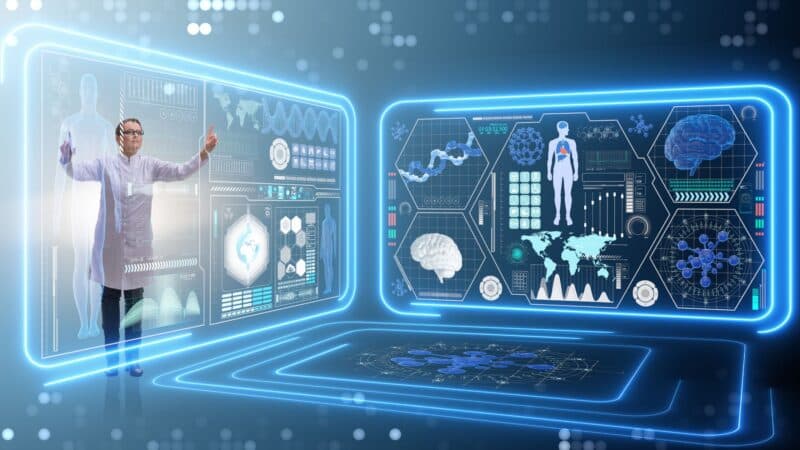
AI is having a big impact on the healthcare business. It can be used for everything from evaluation and treatment to finding new drugs and managing patient care.
- Medical Diagnosis and Treatment
AI is making medical assessments more accurate and faster. Medical pictures like X-rays, MRIs, and CT scans are being analyzed by advanced AI systems that are very accurate and quick. These systems often find problems that human doctors might miss. These systems are especially good at finding early signs of diseases like cancer and heart problems, which could save lives.
For example, IBM’s Watson for Oncology looks at data about cancer patients to suggest specific treatments. This helps doctors make better decisions. A custom AI system cut the number of false positives in a large UK mammogram sample by 25% compared to normal clinical processes. It did this without missing any true positives. This shows how AI could be used to make breast cancer screening more accurate.
- Drug Discovery and Vaccine Research
AI is speeding up the processes of finding new drugs and making vaccines. Algorithms can guess how well and safely chemicals will work, which speeds up the testing and creation processes. AI can look through huge databases of chemical substances and model how they interact with biological targets. This makes it much faster than traditional methods to find possible new drug options.
Companies like Atomwise are using AI to virtually test chemical combinations for drug development, which speeds up the process of finding possible solutions. Having this skill is especially helpful when quickly making new drugs is needed, like during pandemics.
- Electronic health records (EHRs) and how to process patient data
AI is changing how medical data is managed and analyzed in huge ways. AI is becoming more and more important in managing electronic health records (EHRs). It lets huge amounts of medical data be analyzed to find trends that help avoid and treat diseases. AI looks closely at EHR data to find people who are at a high risk and come up with personalized ways to keep them from getting sick. It can figure out how likely you are to get diseases like diabetes or heart disease based on your medical background, habits, and genes.
DeepMind Health from Google uses AI algorithms to look at patient data and help doctors find patients who are likely to get worse. Oracle Health uses AI in its EHR systems to improve the quality of data, speed up work processes, and better coordinate care for patients.
- Remote Patient Assistance
AI makes it possible to watch and help patients from afar, focusing on ease of use, accessibility, and prompt actions. Patients can get medical help in real time, share health information, and get treatment advice from afar. The HealthSuite Digital Platform from Philips employs artificial intelligence (AI) to monitor patients’ vital signs remotely, enabling doctors to provide timely assistance and avoiding the need for patients to return to the hospital.
Chatbots that are driven by AI are being used to give people personalized health tips and help them take care of their illnesses. These virtual health workers can help patients 24 hours a day, seven days a week. This makes patients more likely to want to follow their treatment plans.
Predictive Analytics in Healthcare: AI systems can look for trends in a patient’s past medical records and present health information to guess what health problems they might have. This ability to predict the future lets healthcare workers provide proactive, preventative care, which improves patient results and lowers healthcare costs in the long run.
- AI in Medical Imaging
AI is changing medical images by making findings more quickly and more accurately. Machine learning systems can look at medical pictures to find problems, help plan treatments, and even guess how a patient will do. This technology is especially useful in imaging, where AI can help doctors focus on the most important cases and free up their time.
- Personalized Medicine
AI is advancing specialized medicine by looking at DNA information, living factors, and medical background to make sure that each patient gets the best care possible. Because medicines are tailored to each patient’s specific needs, this method can lead to more successful ones with fewer side effects.
Finance
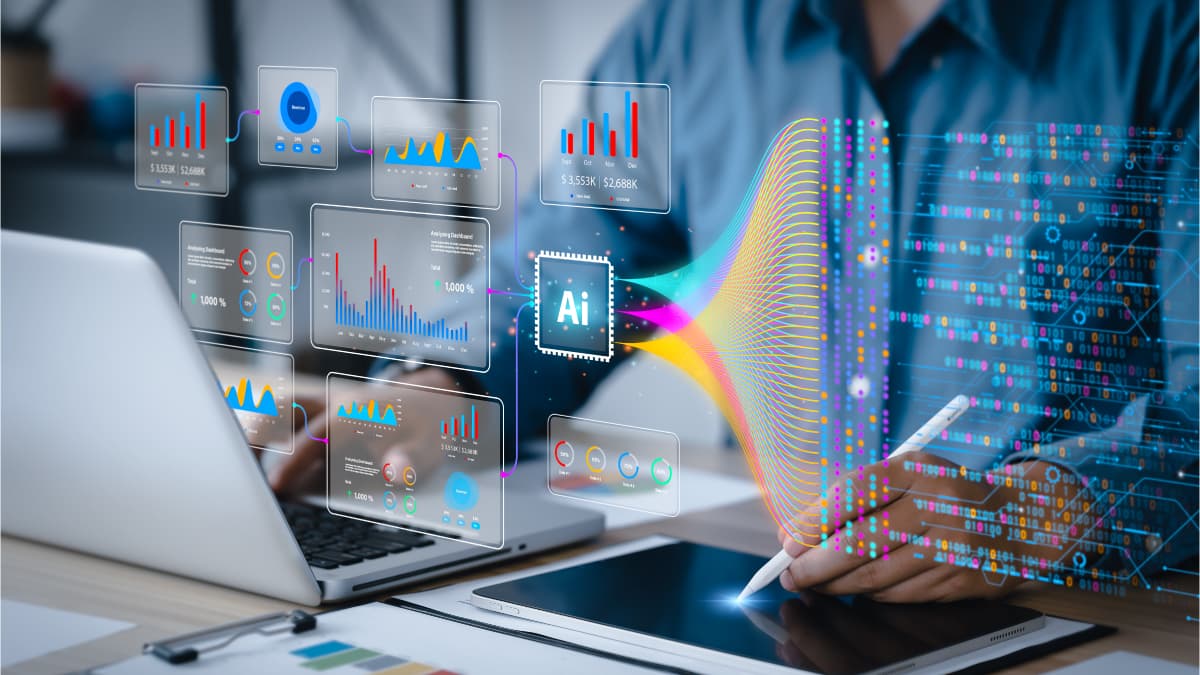
AI is being used in the banking field to help make decisions, make the customer experience better, and make processes run more smoothly.
- Fraud Detection and Prevention
More and more, AI systems are getting better at finding and stopping financial scams. Machine learning systems can look at huge amounts of transaction data in real time, finding trends that don’t make sense and alerting people to possible scams. This feature not only keeps financial institutions and their customers safe, but it also lowers the costs of scams.
- Algorithmic Trading
Algorithmic trade systems that are driven by AI are changing the way that financial markets woThese tools possess the ability to swiftly analyze market data, news, and social media opinions, making quick purchasing decisions.ond. AI is especially important for high-frequency trade businesses that want to get ahead in the markets.
- Personal Finance Management
With robo-advisors and smart planning tools, AI is changing how people handle their personal finances. These systems that use AI can give you specific financial advice, set up automatic saves, and give you information about how you spend your money. We can expect these tools to get even smarter by 2025, letting a wider range of people get highly personalized financial planning and wealth management services.
- Credit Scoring and Risk Assessment
AI is being added to traditional credit score models to make them more accurate and complete in their risk ratings. To figure out if someone is creditworthy, AI programs can look at a bigger range of data points, such as behavior on social media and buying habits, that come from less common places. This method might make it easier for more people and businesses to get credit, including ones that standard models might miss.
- Customer Service and Chatbots
In the banking business, robots and virtual helpers driven by AI are becoming more popular. They handle a wide range of customer questions and deals. These systems can offer support 24 hours a day, seven days a week, answer complicated questions, and even help with budgeting. As technology for natural language processing gets better, these AI helpers will likely become even smarter and more like real people when they talk to us.
- Regulatory Compliance and Risk Management
Financial companies are using AI to help them comply with regulations, which can be AI systems are capable of monitoring transactions, identifying potential compliance issues, and generating reports for regulatory bodies.r regulatory bodies. This not only lowers the chance of not following the rules, but it also makes these jobs much easier to do with a lot fewer people.
- Predictive Analytics for Market Trends
AI is being used to look at market trends and guess how the markets will move in the future. AI systems can give investors and people making financial decisions useful insights by analyzing huge amounts of data from many sources, such as economic signs, news, and social media.
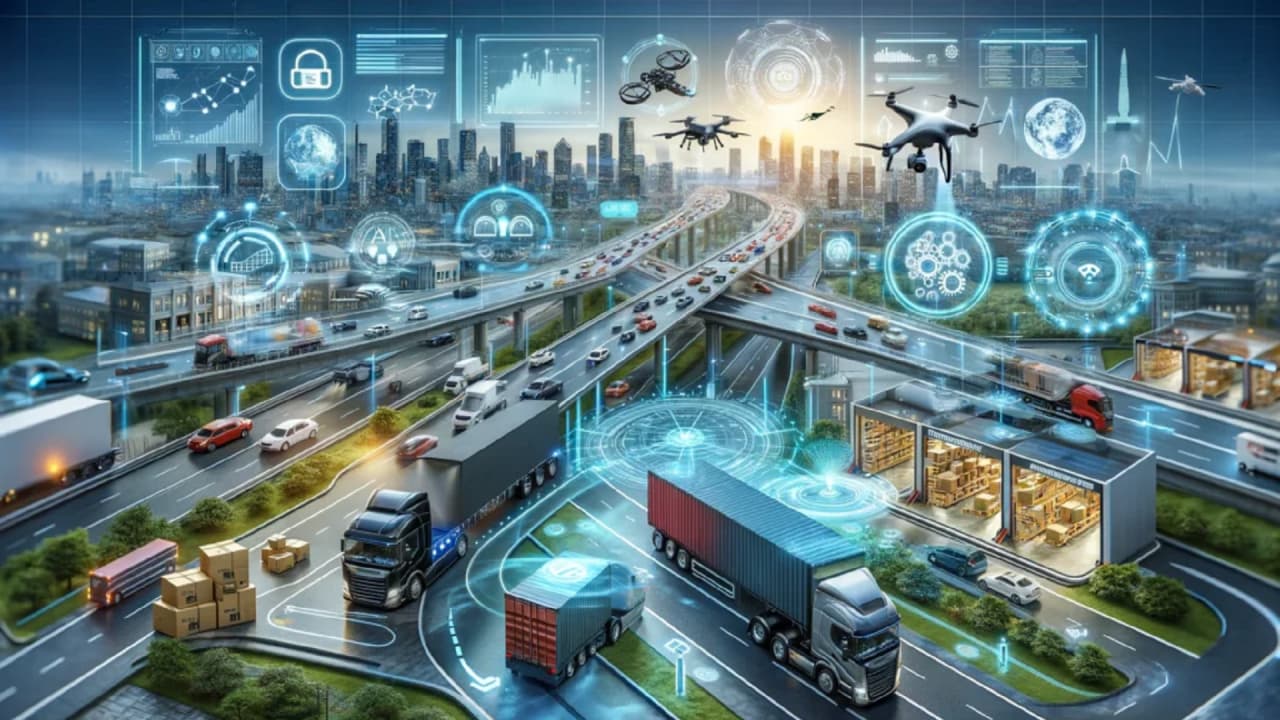
Transportation: AI is having a big impact on the transportation industry, showing up in everything from self-driving cars to smart traffic control systems.
Transportation
The growth of self-driving cars is one of the most obvious ways that AI is being used in transportation. We can expect a lot of progress in this area by 2025, when more self-driving cars, trucks, and even flying cabs will be on the market. These cars use sensors, cameras, and AI systems to safely travel roads. This could cut down on crashes and make traffic move better.
A lot of money is being put into this technology by companies like Tesla, Waymo, and standard cars. The progress made in self-driving cars could change not only how people get around, but also how goods are delivered and how operations work.
- Traffic Management and Smart Cities
AI is a very important part of making smart tools for managing traffic. To make sure that traffic moves more smoothly in towns, these systems use real-time data from a number of sources, such as traffic cameras, GPS data from cars, and weather reports. AI programs can change the times of traffic lights, give drivers suggestions for other routes, and even predict and stop traffic jams before they happen.
In smart cities, transportation systems driven by AI are being combined with other city services to make cities run more smoothly and last longer. This includes handling parking lots, making sure that public transportation lines are best for demand, and lowering the total amount of carbon dioxide released by transportation.
- Predictive Maintenance
AI is changing how vehicles are maintained in the delivery business. AI systems can figure out when repair is needed before a breakdown happens by looking at data from sensors in cars. This method to proactive repair can cut down on downtime by a lot, make cars last longer, and make them safer.
For instance, AI systems are used in the aviation industry to look at data from plane engines and other parts to figure out when they need maintenance. This lowers the chance of problems happening in the air and makes maintenance plans more efficient.
- Logistics and Supply Chain Optimization
AI is changing the way operations and supply chain management are done in the transportation business. Machine learning systems can figure out the best route for delivery cars by looking at things like traffic, weather, and the order of deliveries. This not only makes it more efficient, but it also cuts down on pollution and fuel use.
Robots and automatic systems with AI are being used in stores and distribution centers These systems, operating around the clock, significantly speed up and improve the accuracy of transportation processes.processes much faster and more accurate.
- Passenger Experience Enhancement
AI is being used to improve the experience of passengers in many types of transportation. Face recognition systems driven by AI are making security checks and flying easier at airports. AI systems on trains and buses can tell people in real time about delays, offer different routes, and even make entertainment choices more relevant to each customer.
- Energy Efficiency and Sustainability
More and more people are pushing the transportation business to be better at protecting the earth. AI is a big part of making this possible. AI programs can make electric and hybrid cars run better, extending their battery life and range. AI can help public transportation find the best routes and plans to use less energy and produce fewer emissions.
- Safety and Accident Prevention
Advanced driving aid systems (ADAS) and predictive analytics are two ways that AI is making transportation safer. These systems can warn drivers of possible dangers, help them park and stay in their lanes, and even take over the car in an emergency. AI can also help find and fix safety problems in transportation systems by looking at data from crashes and close calls.
Conclusion
As we move toward 2025, it’s clear that AI will continue to change the way healthcare, banking, and transportation are done. These fields are early adopters of AI, using it to make things more efficient, help people make better decisions, and open up new ways to innovate.
AI is changing how doctors diagnose, treat, and care for patients, which could lead to better health results and more personalized medicine. AI is being used in the finance business to find scams, make buying choices faster and more accurately, and give customers personalized financial advice. In the transportation field, AI is making it possible for self-driving cars, better traffic control, and more efficient operations.
AI is becoming more and more important in these areas, so it’s important to talk about the moral and social effects of this technology. Care will need to be taken with things like data privacy, automated bias, and the effect on jobs.
Even with these problems, AI has a huge amount of promise to improve healthcare, banking, and transportation. With each passing year, we can expect to see even more creative uses of AI that will continue to change these fields and make our lives better. To be successful, we need to use AI’s power in a responsible and moral way, making sure that everyone gets to enjoy its benefits.