Creativity lies at the heart of human expression. Whether through painting, music, writing, or dance, artists channel their thoughts, emotions, and experiences into tangible forms that communicate across generations and cultures. Yet, even the most seasoned artists face a recurring and often frustrating phenomenon—creative block. This mental impasse, where ideas seem unreachable and motivation wanes, can hinder productivity, erode confidence, and disrupt the creative journey.
Recently, artificial intelligence (AI) has emerged as a transformative force across many industries, including the arts. Rather than simply automating repetitive tasks, AI tools today—such as DALL·E, Midjourney, ChatGPT, AIVA, and Runway ML—offer unprecedented support for ideation, inspiration, and artistic experimentation. These tools can generate prompts, compose melodies, visualise concepts, and even simulate stylistic techniques, thereby serving as potential collaborators in the creative process.
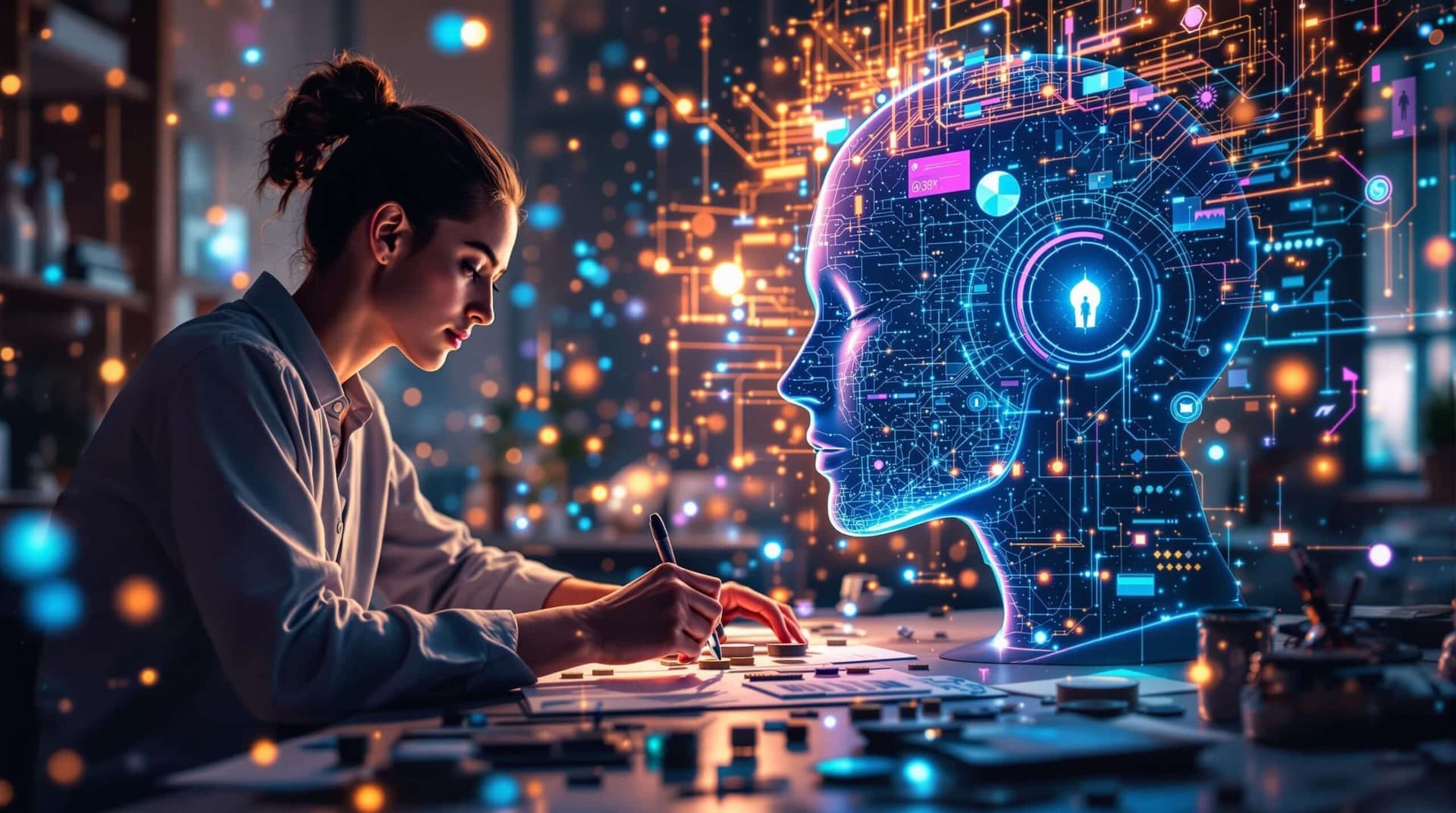
This essay explores the central question: Can AI tools assist in overcoming creative blocks for artists? Drawing on psychological theories of creativity, real-world examples, and technological capabilities, the discussion affirms that AI tools can indeed act as powerful catalysts for reigniting artistic flow. However, it also acknowledges limitations and ethical considerations, suggesting that AI is not a substitute for human creativity but a valuable complement.
1. Understanding Creative Blocks
Before examining AI’s role, it is essential to understand the nature and causes of creative block. Psychologists and neuroscientists identify several factors that contribute to this condition:
a. Fear of Failure or Criticism
Artists often set high standards for themselves. The pressure to produce something exceptional may trigger perfectionism, leading to paralysis.
b. Burnout and Mental Fatigue
Constant creative output without adequate rest or stimulation can exhaust mental resources, making it difficult to access imaginative thinking.
c. Emotional Turmoil or Life Disruption
Personal issues, trauma, or stress can distract from or suppress artistic impulses.
d. Lack of Inspiration
Sometimes, artists simply do not know what to create next. A sense of emptiness or boredom may signal a need for new stimuli.
e. Environmental and Social Factors
Isolation, limited exposure to diverse perspectives, or toxic feedback environments can stifle creativity.
Overcoming such blocks requires not just discipline, but also access to new ideas, emotional support, and fresh perspectives. This is where AI can enter the conversation as a dynamic tool.
2. How AI Tools Work in the Artistic Process
AI tools assist creativity in several ways, depending on their design and function. These can be broadly categorized into:
- Generative tools: Create images, text, or music based on prompts or data.
- Assistive tools: Suggest modifications, offer prompts, or edit work.
- Analytical tools: Evaluate content, identify patterns, or extract meaning.
Prominent AI tools used by artists include:
- Visual Arts: Midjourney, DALL·E, Stable Diffusion
- Writing: ChatGPT, Sudowrite, Jasper
- Music: AIVA, Amper Music, Google’s Magenta
- Video and Animation: Runway ML, Pika Labs
These tools are powered by large language models, neural networks, or machine learning algorithms trained on extensive datasets of human-created content.
3. AI as a Source of Inspiration
One of the most common ways AI combats creative block is by generating unexpected or novel ideas. This function directly aligns with the “associative theory of creativity,” which posits that creativity involves forming new combinations of existing ideas.
a. Prompt-Based Generative Systems
For writers or visual artists, a blank page or canvas can feel daunting. AI models like ChatGPT can offer story prompts, plot twists, dialogue snippets, or thematic outlines that ignite the imagination. Similarly, image-generation models can turn vague concepts into visuals that stimulate further exploration.
Example: A fantasy illustrator struggling to conceptualize a scene can input “a floating city under a stormy sky with glowing crystals” into an AI tool like Midjourney and receive immediate visual interpretations. These outputs may not be final pieces but act as springboards for deeper development.
b. Style Transfer and Remixing
Artists stuck in a repetitive style can use AI to remix their work into different genres or aesthetics. A painter can see how their work might look in the style of Van Gogh or Hokusai. Musicians can remix their tunes using jazz or EDM frameworks.
These stylistic experiments provide new creative directions and help break habitual patterns.
4. AI as a Collaborative Partner
AI tools also provide real-time collaboration, mimicking the benefits of co-creation with another person.
a. Interactive Feedback Loops
Using tools like Runway ML or ChatGPT, artists can iterate quickly—generating drafts, revising, refining, and testing ideas in minutes. This rapid back-and-forth replaces the lonely vacuum many creators face.
Example: A poet working on a sonnet can use AI to experiment with rhyme schemes, metaphors, or alternate endings, exploring options they might not have considered on their own.
b. Cross-Disciplinary Experimentation
AI can simulate expertise in multiple domains. A visual artist can collaborate with a text-based AI to write accompanying narratives. A filmmaker can work with an AI composer to produce soundtracks. These interdisciplinary collaborations generate synergy, often leading to creative breakthroughs.
5. AI and Emotional Regulation
Creative blocks are not only cognitive but also emotional. Stress, anxiety, or low self-esteem can dampen the willingness to create.
AI tools can support emotional regulation in several ways:
a. Low-Stakes Exploration
AI allows artists to explore ideas privately, without fear of judgment. This “sandbox” environment reduces performance anxiety and encourages experimentation.
b. Boosting Confidence Through Success
By quickly generating impressive outputs, AI can offer a psychological lift, reinforcing the artist’s sense of capability and control.
c. Mood Enhancement
Some AI systems, especially in music or narrative, can generate content that resonates emotionally. Listening to an AI-composed melody or reading a hopeful AI poem can elevate mood and rekindle passion.
6. AI in Skill Development and Learning
Creative blocks can also stem from a gap in skill. AI tools can accelerate learning and help artists acquire new techniques.
a. Real-Time Examples and Corrections
For instance, an aspiring screenwriter can input a plot outline and see how AI formats it into a professional screenplay. A beginner painter can upload their work and get stylistic or compositional feedback.
b. Resource Access and Tutorials
AI chatbots can function as personalized art coaches—explaining color theory, recommending materials, or summarizing artistic movements.
These forms of assistance reduce cognitive overload and empower artists to move forward.
7. Case Studies: Real Artists Using AI to Overcome Blocks
a. Mario Klingemann (Quasimondo)
German artist Mario Klingemann is known for combining neural networks with traditional art forms. He uses AI to generate distorted portraits and abstract visuals, often starting with algorithmic outputs and reshaping them into expressive art. Klingemann notes that AI helps him bypass mental ruts by presenting unexpected visual prompts.
b. Holly Herndon – AI in Music
Electronic musician Holly Herndon developed an AI voice called “Spawn” which she trained using her own vocals. This allowed her to explore new sonic landscapes and respond creatively to AI suggestions, refreshing her approach to composition.
c. Writers Using Sudowrite
Many fiction writers now use Sudowrite, a GPT-powered tool, to continue scenes, generate metaphors, or develop dialogue. They report that the tool often helps them push past narrative stagnation.
8. Potential Limitations and Risks
Despite their utility, AI tools also present challenges that can hinder rather than help creativity if not used mindfully.
a. Overreliance and Creative Atrophy
Frequent dependence on AI for ideation may weaken the artist’s internal creative muscle. If the artist stops engaging in reflective or critical thinking, their originality may erode.
b. Homogenization of Style
AI outputs are often based on popular trends in training data. Relying too much on AI may result in formulaic or derivative content, limiting artistic uniqueness.
c. Loss of Authenticity
Artists must navigate the tension between inspiration and authorship. If a work is significantly shaped by AI, can the artist truly claim ownership? This question may deter some from engaging with AI.
d. Ethical and Legal Ambiguities
AI systems trained on copyrighted material may inadvertently generate work that resembles or appropriates existing artists’ styles. This raises ethical dilemmas and legal concerns, especially if the artist intends to monetize the AI-assisted work.
9. Psychological Theories Supporting AI-Assisted Creativity
The positive effects of AI on creative block find support in several psychological theories:
a. Graham Wallas’ Four-Stage Model of Creativity
Wallas proposed that creativity unfolds in four stages: Preparation, Incubation, Illumination, and Verification. AI can assist in each:
- Preparation: Providing research, references, or prompts.
- Incubation: Offering distractions that trigger subconscious connections.
- Illumination: Generating surprise outputs that spark ideas.
- Verification: Helping refine, critique, or finalize the work.
b. Flow Theory
Mihaly Csikszentmihalyi’s flow theory emphasizes the importance of challenge-skill balance and immediate feedback. AI tools can provide this feedback loop, helping artists remain engaged and focused.
c. Cognitive Load Theory
Creative blocks often result from cognitive overload. AI reduces extraneous mental effort (e.g., formatting, finding references), allowing more working memory for core tasks.
10. Ethical Guidelines and Best Practices
To use AI responsibly and effectively, artists should consider the following practices:
- Disclose AI usage in professional work, especially in exhibitions or publications.
- Use AI as a collaborator, not a replacement—retain authorship and make conscious creative decisions.
- Avoid plagiarism by customizing and modifying AI outputs rather than using them verbatim.
- Reflect critically on the role of technology in your practice—what it adds, what it lacks.
11. Future Possibilities: AI as a Creative Companion
The future of AI in the arts may go beyond static prompts or tools. Emerging possibilities include:
a. Emotion-Aware AI
AI that senses the artist’s mood via voice, typing rhythm, or facial expression, and adapts its suggestions accordingly.
b. Personalized Creativity Engines
Artists could train AI models on their own work to create a “creative assistant” that understands their unique style, themes, and rhythms.
c. Virtual Reality AI Collaboration
In immersive environments, artists may one day sculpt, paint, or compose alongside AI in real-time 3D spaces—transforming creativity into an augmented experience.
Conclusion
AI tools offer powerful solutions for artists facing creative blocks, serving as sources of inspiration, collaborative partners, emotional supports, and learning aids. They provide new ways to explore ideas, test variations, and engage with art-making in less intimidating, more experimental environments. By bridging gaps in motivation, confidence, or technical capacity, AI systems can help artists recover their momentum and rediscover joy in their craft.
However, these benefits come with caveats. Artists must remain mindful of overreliance, strive to preserve authenticity, and use AI as a complement rather than a crutch. The goal is not to outsource creativity, but to enrich it—to turn temporary stasis into generative play.
In the long arc of artistic evolution, AI will not replace the human soul in art. But it can—and should—be welcomed as a tool to illuminate its depths, especially in those moments when the light within seems momentarily dimmed.