Artificial Intelligence (AI) is rapidly transforming various sectors of society, offering unprecedented opportunities to address some of the world’s most pressing challenges. Among these challenges are the United Nations Sustainable Development Goals (SDGs), a universal call to action aimed at ending poverty, protecting the planet, and ensuring prosperity for all by 2030. This exploration examines how AI agents can contribute to achieving these goals, assessing their potential applications, benefits, challenges, and implications for sustainable development.
1. AI Agent Sustainable Development Goals
1.1 Overview of the SDGs
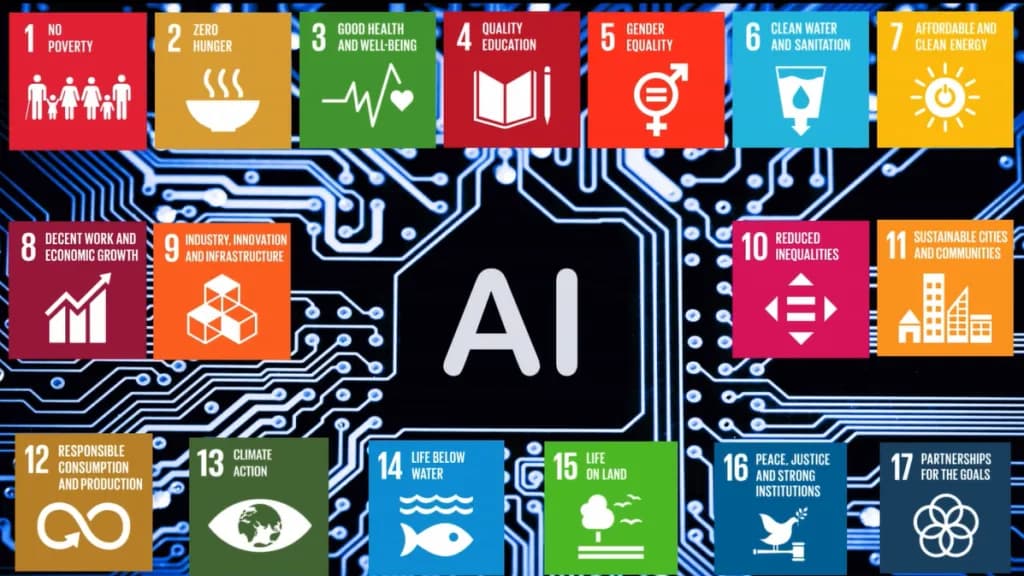
The 17 Sustainable Development Goals were adopted in 2015 by all United Nations member states as part of the 2030 Agenda for Sustainable Development. These goals encompass a broad range of social, economic, and environmental challenges, including:
- No Poverty: End poverty in all its forms everywhere.
- Zero Hunger: End hunger, achieve food security and improved nutrition, and promote sustainable agriculture.
- Good Health and Well-Being: Ensure healthy lives and promote well-being for all at all ages.
- Quality Education: Ensure inclusive and equitable quality education and promote lifelong learning opportunities for all.
- Gender Equality: Achieve gender equality and empower all women and girls.
- Clean Water and Sanitation: Ensure availability and sustainable management of water and sanitation for all.
- Affordable and Clean Energy: Ensure access to affordable, reliable, sustainable, and modern energy for all.
- Decent Work and Economic Growth: Promote sustained, inclusive, and sustainable economic growth, full and productive employment, and decent work for all.
- Industry, Innovation, and Infrastructure: Build resilient infrastructure, promote inclusive and sustainable industrialization, and foster innovation.
- Reduced Inequalities: Reduce inequality within and among countries.
- Sustainable Cities and Communities: Make cities and human settlements inclusive, safe, resilient, and sustainable.
- Responsible Consumption and Production: Ensure sustainable consumption and production patterns.
- Climate Action: Take urgent action to combat climate change and its impacts.
- Life Below Water: Conserve and sustainably use the oceans, seas, and marine resources for sustainable development.
- Life on Land: Protect, restore, and promote sustainable use of terrestrial ecosystems.
- Peace, Justice, and Strong Institutions: Promote peaceful and inclusive societies for sustainable development.
- Partnerships for the Goals: Strengthen the means of implementation and revitalize the global partnership for sustainable development.
2. The Role of AI Agents in Achieving the SDGs
2.1 Definition of AI Agents
AI agents are autonomous or semi-autonomous systems that can perceive their environment, process information, and take actions to achieve specific goals. They utilize various technologies, including machine learning, natural language processing, and robotics, to perform tasks and make decisions.
2.2 Potential Contributions of AI Agents to the SDGs
AI agents can significantly contribute to achieving the SDGs through their applications across different sectors. Below, we explore how these agents can address specific goals.
3. Contributions to Specific Sustainable Development Goals
3.1 No Poverty (SDG 1)
AI-Driven Financial Inclusion
AI agents can enhance access to financial services for underserved populations:
- Microfinance and Credit Scoring: AI algorithms can analyze alternative data sources to assess creditworthiness, enabling microfinance institutions to provide loans to individuals with no formal credit history.
- Mobile Banking: AI-powered chatbots can assist users in managing their finances, accessing banking services, and making informed financial decisions through mobile platforms.
3.2 Zero Hunger (SDG 2)
Smart Agriculture
AI agents can optimize agricultural practices to enhance food security:
- Precision Farming: AI agents can analyze data from sensors and drones to monitor crop health, soil conditions, and weather patterns, enabling farmers to make data-driven decisions that increase yields and reduce waste.
- Supply Chain Optimization: AI can improve food distribution logistics, ensuring that food reaches consumers efficiently and reducing food spoilage.
3.3 Good Health and Well-Being (SDG 3)
Healthcare Innovation
AI agents are transforming healthcare delivery and access:
- Telemedicine: AI-powered virtual health assistants can provide medical advice, symptom checking, and appointment scheduling, making healthcare more accessible, especially in remote areas.
- Predictive Analytics: AI can analyze health data to predict disease outbreaks, enabling timely interventions and resource allocation.
3.4 Quality Education (SDG 4)
Personalized Learning
AI agents can enhance educational outcomes through personalized learning experiences:
- Adaptive Learning Systems: AI can tailor educational content to individual learning styles and paces, helping students grasp concepts more effectively.
- Intelligent Tutoring Systems: AI agents can provide real-time feedback and support to students, identifying areas for improvement and offering targeted resources.
3.5 Gender Equality (SDG 5)
Empowering Women through Technology
AI agents can support gender equality initiatives:
- Access to Information: AI can provide women with access to information on rights, resources, and opportunities, empowering them to make informed decisions.
- Safety and Security: AI-driven applications can enhance personal safety, offering real-time alerts and support for women in vulnerable situations.
3.6 Clean Water and Sanitation (SDG 6)
Water Resource Management
AI agents can optimize water usage and management:
- Smart Water Systems: AI can analyze data from sensors to monitor water quality and distribution, identifying leaks and optimizing supply networks.
- Predictive Maintenance: AI can predict failures in water infrastructure, enabling proactive maintenance and reducing service disruptions.
3.7 Affordable and Clean Energy (SDG 7)
Energy Efficiency and Management
AI agents can facilitate the transition to renewable energy sources:
- Smart Grids: AI can optimize energy distribution and consumption by analyzing real-time data, improving efficiency and reducing waste.
- Renewable Energy Forecasting: AI models can predict energy generation from renewable sources, helping to balance supply and demand effectively.
3.8 Decent Work and Economic Growth (SDG 8)
Enhancing Workforce Productivity
AI agents can boost economic growth by improving productivity:
- Automation of Routine Tasks: AI can automate repetitive tasks, allowing human workers to focus on higher-value activities and enhancing overall productivity.
- Skill Development: AI-driven platforms can provide personalized training and upskilling opportunities, preparing workers for the demands of the evolving job market.
3.9 Industry, Innovation, and Infrastructure (SDG 9)
Driving Innovation
AI agents can foster innovation in industries:
- Research and Development: AI can accelerate R&D processes by analyzing vast datasets, identifying trends, and suggesting innovative solutions.
- Smart Manufacturing: AI-driven systems can optimize production processes, reduce waste, and enhance product quality in manufacturing.
3.10 Reduced Inequalities (SDG 10)
Promoting Inclusivity
AI agents can help bridge gaps in access and opportunities:
- Accessibility Technologies: AI can enhance accessibility for individuals with disabilities, providing tools that facilitate communication and mobility.
- Data-Driven Policy Making: AI can analyze social data to identify disparities and inform policies aimed at reducing inequality.
3.11 Sustainable Cities and Communities (SDG 11)
Urban Planning and Management
AI agents can contribute to the development of sustainable urban environments:
- Smart City Solutions: AI can optimize traffic management, waste disposal, and energy consumption in urban areas, enhancing livability and sustainability.
- Community Engagement: AI-driven platforms can facilitate communication between city planners and citizens, ensuring that community needs are addressed.
3.12 Responsible Consumption and Production (SDG 12)
Sustainable Supply Chains
AI agents can promote responsible consumption and production patterns:
- Resource Optimization: AI can analyze consumption patterns and supply chain data to identify opportunities for reducing waste and improving efficiency.
- Circular Economy Models: AI can support the development of circular economy practices by facilitating recycling and resource recovery processes.
3.13 Climate Action (SDG 13)
Climate Mitigation and Adaptation
AI agents can play a crucial role in addressing climate change:
- Environmental Monitoring: AI can analyze data from satellite imagery and sensors to monitor environmental changes, helping to identify and mitigate climate risks.
- Carbon Footprint Reduction: AI-driven tools can assist businesses in measuring and reducing their carbon footprints, promoting sustainability.
3.14 Life Below Water (SDG 14)
Marine Conservation
AI agents can support the conservation of marine ecosystems:
- Fisheries Management: AI can analyze fish populations and environmental data to inform sustainable fishing practices and policies.
- Ocean Monitoring: AI-driven systems can monitor ocean health, tracking pollution and assessing the impacts of climate change on marine life.
3.15 Life on Land (SDG 15)
Biodiversity Protection
AI agents can aid in the conservation of terrestrial ecosystems:
- Wildlife Monitoring: AI can analyze data from cameras and sensors to monitor wildlife populations and detect poaching activities.
- Land Use Planning: AI can assist in land use planning, promoting sustainable practices that protect biodiversity.
3.16 Peace, Justice, and Strong Institutions (SDG 16)
Strengthening Governance
AI agents can enhance governance and institutional effectiveness:
- Fraud Detection: AI can analyze financial and administrative data to detect fraud and corruption, promoting transparency and accountability.
- Crisis Management: AI systems can support decision-making during crises, providing real-time data and analysis to inform responses.
3.17 Partnerships for the Goals (SDG 17)
Facilitating Collaboration
AI agents can foster collaboration between stakeholders:
- Data Sharing Platforms: AI can enable secure and efficient sharing of data among governments, NGOs, and private sectors, facilitating coordinated efforts toward the SDGs.
- Collaborative Decision-Making: AI-driven tools can support collaborative decision-making processes, ensuring that diverse perspectives are considered.
4. Challenges and Considerations
4.1 Ethical Considerations
The deployment of AI agents in achieving the SDGs raises ethical questions:
- Bias and Fairness: AI systems can perpetuate existing biases if they are trained on biased data, leading to unfair outcomes. Ensuring fairness in AI decision-making is crucial.
- Privacy Concerns: The collection and analysis of data by AI agents may raise privacy concerns, particularly in sensitive areas such as healthcare and personal information.
4.2 Accessibility and Inclusivity
For AI agents to contribute effectively to the SDGs, they must be accessible and inclusive:
- Bridging the Digital Divide: Ensuring access to AI technology for marginalized communities is essential for equitable development.
- User-Centric Design: AI systems should be designed with the end-user in mind, ensuring that they meet the needs of diverse populations.
4.3 Resource Requirements
The development and deployment of AI agents require significant resources:
- Data Availability: Access to high-quality data is essential for training effective AI models, which may not be readily available in all regions.
- Infrastructure and Expertise: Implementing AI solutions often requires robust infrastructure and skilled personnel, which may be lacking in some areas.
5. Case Studies of AI Agents Contributing to the SDGs
5.1 AI in Agriculture
Precision Agriculture
AI agents are being used to optimize agricultural practices, contributing to SDG 2 (Zero Hunger):
- Case Study: Companies like CropX use AI-driven soil sensors to provide farmers with actionable insights, improving crop yields while minimizing water usage.
5.2 AI in Healthcare
Telehealth Solutions
AI agents are enhancing healthcare access, supporting SDG 3 (Good Health and Well-Being):
- Case Study: Babylon Health employs AI chatbots to provide medical consultations and health advice, increasing access to healthcare services, especially in underserved areas.
5.3 AI in Urban Planning
Smart City Initiatives
AI agents are playing a role in developing sustainable cities, addressing SDG 11 (Sustainable Cities and Communities):
- Case Study: Cities like Barcelona utilize AI to optimize traffic flow and reduce congestion, improving urban mobility and sustainability.
5.4 AI for Climate Action
Environmental Monitoring
AI agents are aiding climate action efforts, contributing to SDG 13 (Climate Action):
- Case Study: The Global Forest Watch platform uses AI to monitor deforestation in real-time, providing critical data to support conservation efforts.
6. Future Directions for AI Agents and the SDGs
6.1 Continuous Improvement of AI Technologies
As AI technologies evolve, their capacity to contribute to the SDGs will improve:
- Enhanced Algorithms: Future AI agents will likely incorporate advanced algorithms that enhance their decision-making capabilities and adaptability.
- Interdisciplinary Approaches: Collaborations between AI researchers and experts in sustainability will drive innovation in applying AI to SDG challenges.
6.2 Strengthening Partnerships
Building partnerships will be essential to maximize the impact of AI agents:
- Cross-Sector Collaboration: Engaging governments, NGOs, and the private sector will facilitate the sharing of resources and expertise necessary for effective AI deployment.
- Global Initiatives: International collaborations can help address global challenges collectively, leveraging AI’s capabilities to achieve the SDGs.
6.3 Fostering Ethical AI Practices
Ensuring that AI agents support sustainable development in an ethical manner is crucial:
- Establishing Guidelines: Developing ethical guidelines for AI deployment will help mitigate risks and ensure fairness, accountability, and transparency.
- User Engagement: Involving diverse stakeholders in the design and implementation of AI systems will promote inclusivity and responsiveness to community needs.
Conclusion
AI agents hold significant potential to contribute to the achievement of the Sustainable Development Goals. By leveraging their capabilities across various sectors, these intelligent systems can address critical challenges such as poverty, hunger, health, education, and environmental sustainability.
However, to realize this potential, it is essential to navigate the ethical, accessibility, and resource-related challenges associated with AI deployment. Through collaborative efforts, continuous improvement of AI technologies, and a commitment to ethical practices, we can harness the power of AI agents to create a more sustainable and equitable future for all. The integration of AI into efforts to achieve the SDGs represents not just an opportunity for innovation, but a vital step toward addressing the pressing challenges facing humanity today.