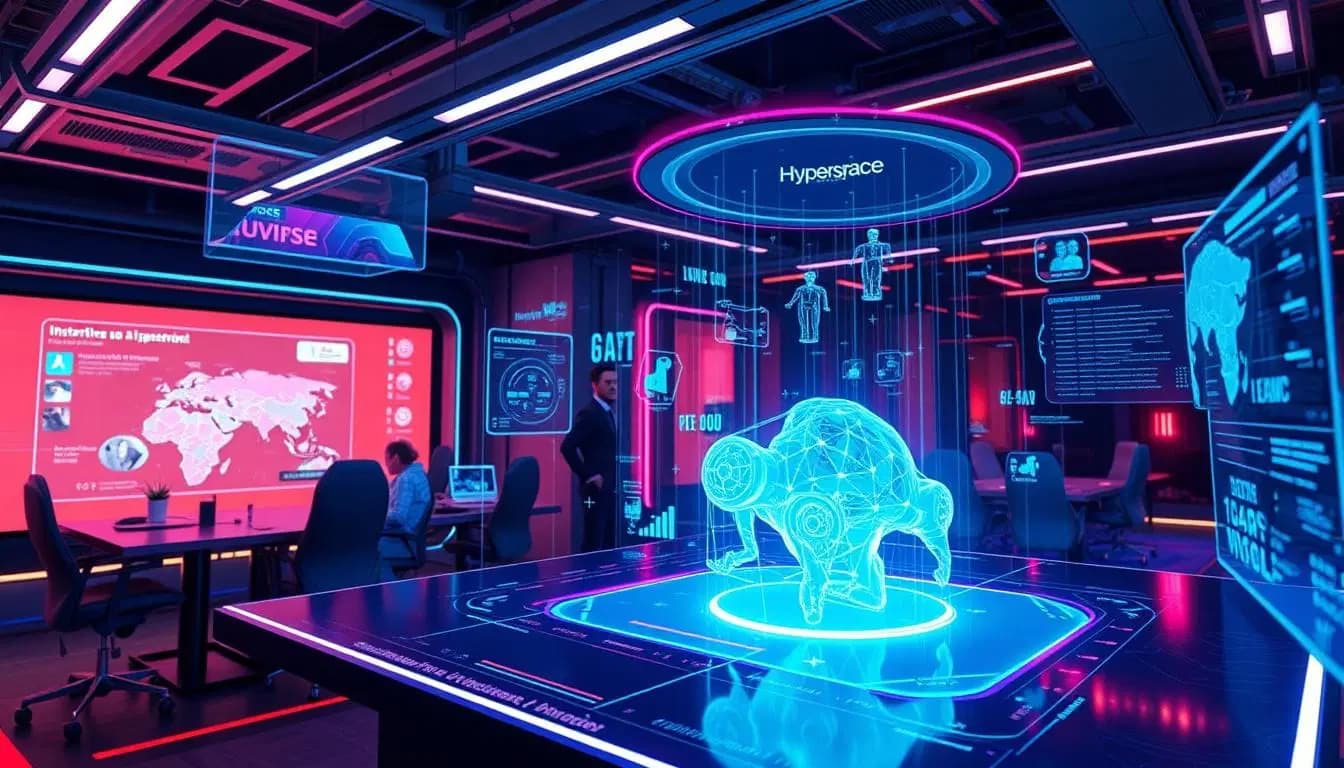
The rise of remote work has transformed the way teams collaborate, making it imperative for organizations to adopt tools and technologies that enhance communication and productivity. Artificial intelligence (AI) has emerged as a powerful ally in this domain, providing solutions that facilitate seamless collaboration among remote teams. This article explores how AI enhances remote collaboration, the technologies involved, real-world applications, benefits, challenges, and future trends.
1. Remote Collaboration
1.1 Definition of Remote Collaboration
Remote collaboration refers to the ability of team members to work together effectively from different geographic locations. This can involve various forms of communication and cooperation, including video conferencing, file sharing, project management, and real-time collaboration on documents.
1.2 Importance of Effective Remote Collaboration
Effective remote collaboration is crucial for several reasons:
- Global Talent Access: Organizations can tap into a broader talent pool by hiring employees from anywhere in the world.
- Increased Flexibility: Remote work offers flexibility in work schedules, which can lead to improved employee satisfaction and retention.
- Cost Savings: Companies can reduce overhead costs associated with physical office spaces.
2. Key Features of AI in Facilitating Remote Collaboration
2.1 Enhanced Communication
AI technologies greatly enhance communication within remote teams by providing tools that streamline interactions.
Natural Language Processing (NLP)
NLP enables AI systems to understand and process human language, improving communication in several ways:
- Chatbots: AI-powered chatbots can handle routine inquiries and provide instant responses, allowing team members to focus on more complex issues.
- Language Translation: AI translation tools facilitate communication among team members who speak different languages, breaking down language barriers.
Sentiment Analysis
AI can analyze the tone and sentiment of written communication, helping teams gauge the emotional context of messages. This insight can foster better understanding and empathy among team members.
2.2 Intelligent Meeting Management
AI tools can optimize remote meetings, ensuring they are efficient and productive.
Smart Scheduling
AI scheduling assistants can analyze participants’ calendars to find optimal meeting times, reducing the time spent coordinating schedules.
Automated Transcription
AI tools can automatically transcribe meetings, providing written records that team members can refer back to. This ensures that everyone is on the same page and helps those who could not attend catch up easily.
2.3 Document Collaboration
AI enhances collaborative document editing and management, allowing teams to work together effectively.
Real-Time Collaboration
AI-driven platforms enable multiple users to collaborate on documents simultaneously, with changes reflected in real time. This feature enhances productivity and reduces version control issues.
Content Suggestions
AI tools can provide content suggestions based on the context of the document, improving the quality of collaborative output. For instance, AI can recommend relevant data, articles, or edits that align with the team’s goals.
2.4 Project Management
AI tools facilitate project management by automating processes and providing valuable insights.
Task Automation
AI can automate repetitive project management tasks, such as assigning tasks, tracking progress, and sending reminders. This automation frees up team members to focus on higher-level strategic work.
Predictive Analytics
AI-driven analytics can forecast project timelines and resource needs based on historical data, allowing teams to plan more effectively and anticipate potential roadblocks.
2.5 Enhanced Security
AI plays a critical role in ensuring the security of remote collaboration tools and data.
Threat Detection
AI systems can monitor user behavior and detect anomalies that may indicate security breaches. This proactive approach helps safeguard sensitive information shared during remote collaboration.
Access Control
AI can automate access control mechanisms, ensuring that only authorized users can access specific documents and collaboration tools.
3. Technologies Behind AI in Remote Collaboration
3.1 Machine Learning
Machine learning is a key technology that powers many AI tools used for remote collaboration.
Supervised Learning
In supervised learning, algorithms are trained on labeled datasets to perform specific tasks such as document classification or sentiment analysis, enhancing the accuracy of collaboration tools.
Unsupervised Learning
Unsupervised learning allows AI systems to identify patterns in data without predefined labels. This capability can be beneficial for understanding user behaviors and improving collaboration tools based on usage patterns.
3.2 Natural Language Processing (NLP)
NLP technologies enable AI systems to understand and generate human language, enhancing communication within remote teams.
Text Analysis
NLP can analyze text data from emails, chat messages, and documents to extract insights and improve decision-making. This analysis can help teams identify key topics and sentiments in their communications.
Voice Recognition
AI-powered voice recognition systems allow team members to use voice commands for tasks such as scheduling meetings or searching for documents, streamlining workflows.
3.3 Cloud Computing
Cloud computing provides the infrastructure that enables remote collaboration tools to function effectively.
Scalability
Cloud-based collaboration tools can scale easily to accommodate more users and larger data sets, allowing teams to adapt to changing needs.
Accessibility
Cloud services enable team members to access collaboration tools and documents from anywhere, fostering a flexible and agile work environment.
4. Real-World Applications of AI in Remote Collaboration
4.1 Virtual Communication Platforms
AI is integrated into virtual communication platforms to enhance remote interactions.
Video Conferencing Tools
AI features such as background noise cancellation, automatic framing, and virtual backgrounds improve the quality of video calls, making remote meetings more effective.
Interactive Whiteboards
AI-powered interactive whiteboards enable team members to brainstorm and collaborate in real time, regardless of their physical location.
4.2 Project Management Software
AI-driven project management tools facilitate collaboration by offering features that enhance planning and execution.
Asana and Trello
These platforms use AI to automate task assignments, track progress, and provide insights into team performance, ensuring that projects stay on track.
Monday.com
AI features in Monday.com can predict project completion times and resource requirements, enabling teams to plan more effectively.
4.3 Customer Relationship Management (CRM)
AI-enhanced CRM systems streamline collaboration between sales and marketing teams.
Lead Scoring
AI can analyze customer interactions to score leads based on their likelihood to convert, helping sales teams prioritize their outreach efforts.
Personalized Communication
AI tools can suggest personalized messaging for customer interactions, improving engagement and collaboration between team members and clients.
4.4 Knowledge Management Systems
AI tools facilitate knowledge sharing and collaboration within organizations.
Document Management
AI-powered document management systems can automatically categorize and tag documents, making it easier for team members to find and share information.
Knowledge Bases
AI can analyze employee inquiries and interactions to identify common questions, enabling organizations to create comprehensive knowledge bases that enhance collaboration and efficiency.
5. Benefits of AI in Facilitating Remote Collaboration
5.1 Increased Efficiency
AI tools significantly enhance efficiency by automating routine tasks and streamlining processes.
Time Savings
By reducing the time spent on administrative tasks, employees can focus on higher-value work, leading to faster project completion and improved outcomes.
Improved Workflow
Automation of scheduling, task assignments, and document management creates a more streamlined workflow, minimizing bottlenecks and enhancing collaboration.
5.2 Enhanced Communication
AI tools improve communication by providing real-time insights and facilitating better interactions among team members.
Faster Response Times
AI chatbots and virtual assistants can provide instant responses to inquiries, reducing wait times and enhancing team communication.
Clarity and Understanding
Sentiment analysis and NLP tools help ensure that messages are understood accurately, reducing misunderstandings and fostering better collaboration.
5.3 Better Decision-Making
AI tools provide data-driven insights that enhance decision-making processes.
Real-Time Analytics
Access to real-time data and analytics allows teams to make informed decisions quickly, adapting to changing circumstances and market conditions.
Predictive Insights
AI-powered predictive analytics help organizations anticipate trends and make proactive decisions, improving overall strategic planning.
5.4 Improved Employee Satisfaction
By automating mundane tasks and enhancing communication, AI tools contribute to higher employee satisfaction.
Focus on Meaningful Work
When employees are freed from repetitive tasks, they can engage in more meaningful work, leading to increased job satisfaction and morale.
Skill Development Opportunities
AI tools that facilitate personalized learning and development help employees enhance their skills, contributing to career growth and fulfillment.
6. Challenges and Limitations of AI in Remote Collaboration
6.1 Data Privacy and Security
The use of AI tools raises significant data privacy and security concerns.
Sensitive Data Handling
AI systems often require access to sensitive employee and customer data, raising concerns about how this data is collected, stored, and used.
Regulatory Compliance
Organizations must navigate complex regulations related to data protection, such as GDPR, to ensure compliance when utilizing AI tools.
6.2 Algorithmic Bias
AI tools can inadvertently perpetuate biases present in training data, leading to discriminatory outcomes.
Discriminatory Practices
Bias in AI algorithms can result in unfair treatment of certain demographic groups, impacting hiring decisions, promotions, and customer interactions.
Mitigation Strategies
Organizations must actively work to identify and mitigate bias in AI models, ensuring fair and equitable outcomes.
6.3 Technical Limitations
Despite advancements, AI tools face technical challenges that can impact their effectiveness.
Dependence on Quality Data
The performance of AI models is heavily reliant on the quality and quantity of training data. Limited or biased data can hinder model performance.
Complexity of Implementation
Integrating AI tools into existing workflows can be complex and may require significant changes to processes and systems.
6.4 Employee Resistance
The introduction of AI tools may face resistance from employees who fear job displacement or changes to their roles.
Change Management
Organizations must implement effective change management strategies to address employee concerns and facilitate a smooth transition to AI-enhanced workflows.
Training and Support
Providing adequate training and support for employees is crucial to ensure they feel comfortable and confident using AI tools.
7. Future Trends in AI for Remote Collaboration
7.1 Advanced AI Algorithms
The future of AI tools will likely involve the development of more advanced algorithms that enhance remote collaboration.
Deep Learning Advancements
As deep learning technologies evolve, AI tools will become increasingly adept at understanding complex data and providing actionable insights.
Generative AI
The integration of generative AI may enable the creation of new content and solutions, further enhancing creativity and innovation in remote collaboration.
7.2 Greater Personalization
Future AI tools will likely offer more personalized experiences for employees.
User Behavior Analysis
By analyzing user behavior and preferences, AI tools can tailor recommendations and suggestions to individual employees, enhancing their collaboration experience.
Adaptive Learning Systems
AI tools could learn from employee interactions over time, adapting their functionalities and outputs to better meet individual needs.
7.3 Expanding Applications Across Industries
The applications of AI tools for remote collaboration will continue to expand across various industries and sectors.
Healthcare
AI tools are increasingly used in healthcare to streamline operations, enhance patient care, and improve administrative efficiency.
Manufacturing
In manufacturing, AI can optimize production processes, enhance supply chain management, and improve quality control.
7.4 Ethical Considerations
As AI tools become more prevalent, addressing ethical considerations will be paramount.
Transparency and Accountability
Organizations must ensure transparency in AI processes and hold themselves accountable for the outcomes of AI-driven decisions.
Responsible AI Use
Establishing guidelines for the responsible use of AI tools will promote trust and accountability among employees and customers.
Wrap Up
AI is revolutionizing remote collaboration by enhancing communication, optimizing meeting management, and facilitating document collaboration. By automating routine tasks and providing valuable insights, AI empowers teams to work together effectively, regardless of their physical location.
While challenges such as data privacy concerns, algorithmic bias, and employee resistance remain, the benefits of AI tools in facilitating remote collaboration are substantial. As technology evolves, organizations must address these challenges while embracing the opportunities that AI presents.
The future of AI in remote collaboration promises further advancements, including enhanced algorithms, greater personalization, and expanding applications across industries. By fostering a culture of innovation and responsible AI use, organizations can harness the full potential of AI tools to enhance remote collaboration and drive success in an increasingly competitive landscape.