Artificial Intelligence (AI) is reshaping the landscape of software testing and quality assurance. By integrating AI into test automation, organizations can enhance testing efficiency, reduce time-to-market, and improve overall software quality. This comprehensive guide explores the implementation of AI in test automation, covering its benefits, methodologies, tools, and challenges.
1. Introduction to Test Automation
1.1 What is Test Automation?
Test automation refers to the process of using specialized software tools to execute predefined tests on a software application. The primary aim is to validate that the application behaves as expected, ensuring quality and functionality before deployment.
1.2 Importance of Test Automation
The significance of test automation lies in its ability to:
- Increase Efficiency: Automated tests can be executed faster than manual tests, allowing for more frequent testing cycles.
- Improve Accuracy: Automation reduces human error, ensuring consistent and repeatable test execution.
- Enhance Coverage: Automated testing can cover a larger number of test cases and scenarios, leading to more thorough testing.
- Support CI/CD Practices: Automation is vital for continuous integration and continuous deployment (CI/CD) pipelines, enabling rapid development cycles.
1.3 Traditional vs. AI-Driven Testing
While traditional test automation relies heavily on predefined scripts and rule-based testing, AI-driven testing incorporates intelligent algorithms that can learn from data and adapt to changes in the application. This transition represents a significant advancement in how testing can be approached, making it more dynamic and responsive.
2. Understanding AI in Test Automation
2.1 What is AI?
Artificial Intelligence refers to the simulation of human intelligence processes by machines, particularly computer systems. AI encompasses various technologies, including:
- Machine Learning (ML): The ability of systems to learn from data and improve performance over time.
- Natural Language Processing (NLP): The capability of machines to understand and interpret human language.
- Computer Vision: The ability to interpret and analyze visual information from the world.
2.2 Benefits of AI in Test Automation
Integrating AI into test automation provides several advantages:
- Enhanced Efficiency: AI can automate repetitive tasks and optimize test case execution.
- Improved Accuracy: AI-driven tests can adapt to changes in the application, reducing the likelihood of false positives and negatives.
- Faster Feedback Loops: AI can analyze test results quickly, providing immediate insights to development teams.
- Cost Reduction: By streamlining testing processes and reducing manual effort, AI can lower overall testing costs.
3. AI Implementation Strategies in Test Automation
3.1 Assessing Current Testing Processes
Before implementing AI, organizations should evaluate their existing testing processes. This involves:
- Analyzing Current Test Coverage: Determine the ratio of automated tests to manual tests and identify gaps.
- Reviewing Existing Tools: Assess the capabilities of current testing tools and their compatibility with AI technologies.
- Evaluating Team Skills: Identify gaps in the skills needed to implement AI, such as machine learning and data analysis.
3.2 Identifying Suitable Use Cases
Selecting the right use cases for AI in test automation is crucial for success. Common applications include:
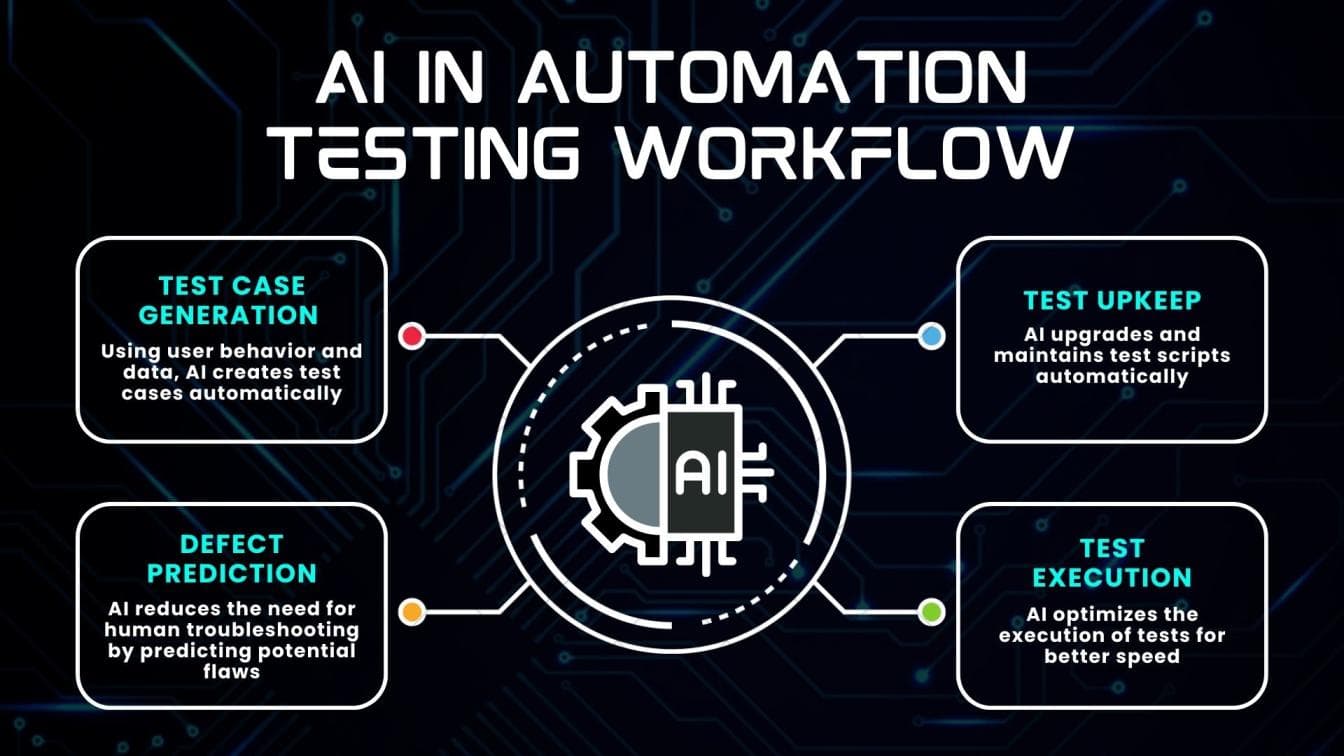
- Automated Test Case Generation: Using AI to create test cases based on user behavior and application code.
- Self-Healing Test Automation: Implementing AI that automatically updates test scripts when the application changes.
- Intelligent Test Prioritization: Leveraging AI to prioritize test cases based on risk assessments and historical data.
3.3 Selecting the Right Tools
Choosing appropriate tools is essential for effective AI implementation. Key considerations include:
- Compatibility: Ensure that AI tools can integrate seamlessly with existing testing frameworks and environments.
- Scalability: Select tools that can grow with the organization’s testing needs.
- User-Friendliness: Opt for tools that are easy to use, especially for team members who may not have a technical background.
3.4 Building a Skilled Team
A skilled team is fundamental for implementing AI in test automation. Steps to consider include:
- Training: Provide education on AI concepts and tools to the testing team.
- Collaboration: Foster collaboration between testers, developers, and data scientists to encourage knowledge sharing.
- Continuous Learning: Promote ongoing education to keep the team updated on the latest AI advancements and best practices.
4. AI Techniques for Test Automation
4.1 Machine Learning
Machine learning algorithms can analyze historical test data to identify patterns and make predictions about future test outcomes. Key applications include:
- Test Case Prioritization: ML can analyze past test results to prioritize test cases based on their likelihood of failure, improving efficiency.
- Anomaly Detection: ML can identify anomalies in application behavior that may indicate defects, facilitating early detection.
4.2 Natural Language Processing
NLP can simplify the management of test cases by enabling testers to write scripts in natural language. Applications include:
- Test Case Generation: NLP can convert user stories or requirements written in natural language into automated test cases.
- Sentiment Analysis: Analyzing customer feedback to identify areas for improvement in the application.
4.3 Computer Vision
Computer vision can automate testing for applications with graphical user interfaces (GUIs). Applications include:
- Visual Testing: AI can compare screenshots of the application under test against expected results to identify visual discrepancies.
- Element Recognition: Automatically identifying UI elements for testing without relying on traditional locators.
4.4 Robotic Process Automation
Robotic Process Automation (RPA) can be combined with AI to automate repetitive tasks in testing. Applications include:
- Data Entry Automation: RPA can automate data entry tasks, reducing manual effort and errors.
- End-to-End Testing: RPA can simulate user interactions with the application to perform end-to-end testing.
5. Integrating AI with Existing Testing Frameworks
5.1 Enhancing Test Scripts
AI can enhance existing test scripts by:
- Self-Healing Capabilities: Implementing AI algorithms that automatically update test scripts in response to changes in the application.
- Dynamic Test Generation: Using AI to create new test cases based on changes in application behavior, ensuring comprehensive coverage.
5.2 Continuous Testing and Integration
Integrating AI into continuous testing and CI/CD pipelines can lead to:
- Faster Feedback Loops: AI can analyze test results in real-time, providing immediate feedback to development teams, allowing for quicker iterations.
- Automated Regression Testing: AI can prioritize regression tests based on code changes, reducing the overall testing time and enhancing efficiency.
5.3 Data-Driven Testing
AI can enhance data-driven testing by:
- Intelligent Data Selection: Using AI to select relevant test data based on application usage patterns, ensuring comprehensive and representative testing.
- Data Generation: AI can generate synthetic data for testing when real data is scarce or sensitive, ensuring robust testing scenarios.
6. Challenges of Implementing AI in Test Automation
6.1 Data Quality and Availability
AI algorithms require high-quality data to function effectively. Challenges include:
- Data Bias: If training data is biased, it can lead to inaccurate predictions and test results, undermining the effectiveness of AI-driven testing.
- Data Scarcity: Organizations may struggle to obtain sufficient data for training AI models, limiting their effectiveness.
6.2 Skill Gap and Training
The successful implementation of AI in test automation requires a skilled workforce. Challenges include:
- Lack of Expertise: Many organizations lack team members with the necessary knowledge of AI and machine learning, hindering implementation.
- Training Costs: Providing adequate training can be resource-intensive, requiring time and financial investment.
6.3 Resistance to Change
Organizations may face resistance when introducing AI technologies. Challenges include:
- Cultural Barriers: Employees may be hesitant to adopt new technologies due to fear of job displacement or a lack of understanding.
- Change Management: Managing the transition to AI-driven processes requires careful planning, communication, and support from leadership.
6.4 Managing Complexity
AI systems can introduce complexity into testing processes. Challenges include:
- Integration Difficulties: Integrating AI tools with existing systems can be challenging and time-consuming, requiring careful planning and execution.
- Maintenance and Support: Ongoing maintenance of AI systems requires specialized knowledge and resources, which can strain existing teams.
7. Future Trends in AI-Driven Test Automation
7.1 Increased Adoption of AI Tools
As organizations recognize the benefits of AI in test automation, adoption rates are expected to rise significantly. This trend will lead to:
- Wider Availability of AI Tools: More vendors will offer AI-driven testing solutions, providing organizations with a broader range of options.
- Standardization of Practices: Best practices for AI-driven testing will emerge, promoting consistency and collaboration across the industry.
7.2 Evolution of Testing Roles
The integration of AI will change the roles of testing professionals. Future trends include:
- Emergence of New Roles: Roles focused on AI testing, data analysis, and machine learning will become more prevalent, creating new opportunities for career advancement.
- Collaboration with Data Scientists: Testers will increasingly collaborate with data scientists to leverage AI capabilities, fostering cross-functional teamwork.
7.3 Enhanced Collaboration Between Teams
AI will facilitate better collaboration between development and testing teams. Future trends include:
- Shared Responsibilities: Teams will work together on AI initiatives, breaking down traditional silos and promoting a culture of shared ownership.
- Improved Communication: AI-driven tools will enhance communication by providing real-time insights and feedback, enabling more effective collaboration.
7.4 Greater Focus on User Experience
As AI becomes more integrated into testing, there will be an increased focus on user experience. Future trends include:
- User-Centric Testing: AI will enable more personalized testing approaches that prioritize user needs and preferences, ensuring a better end-user experience.
- Continuous Feedback Loop: AI will facilitate continuous feedback from users, allowing for quicker iterations and improvements in the application.
8. Conclusion
Incorporating AI into test automation presents a transformative opportunity for organizations seeking to enhance their software testing processes. By leveraging AI technologies, organizations can improve efficiency, accuracy, and overall software quality. However, successful implementation requires careful planning, a skilled workforce, and a willingness to embrace change.
As the landscape of software development continues to evolve, the integration of AI in test automation will play a crucial role in shaping the future of software testing. By staying informed about emerging trends and technologies, organizations can position themselves for success in an increasingly competitive environment. Embracing AI in test automation is not just a technological upgrade but a strategic imperative that can drive innovation and improve the overall quality of software products.