The rapid advancement of artificial intelligence (AI) has transformed many facets of human society, and the art world is no exception. AI-generated artworks—images, music, literary texts, films, and more—have not only entered galleries and digital spaces but have also won awards and sold for millions. These developments bring with them a pressing legal and philosophical question: Should AI-generated artworks be eligible for copyright protection?
This question is not merely academic. It touches the very core of what we understand about creativity, authorship, and intellectual property. The traditional framework of copyright law is built upon the foundation of human creativity and originality. However, AI tools such as DALL·E, Midjourney, ChatGPT, and Stable Diffusion can now autonomously generate content with minimal human involvement. Can these outputs, lacking human authorship, qualify for protection? Or should copyright be restricted only to works that involve meaningful human input?
This essay critically examines this issue by exploring the foundations of copyright law, the nature of AI-generated art, the arguments for and against granting such works protection, comparative international legal perspectives, and the future implications for artists, tech companies, and society.
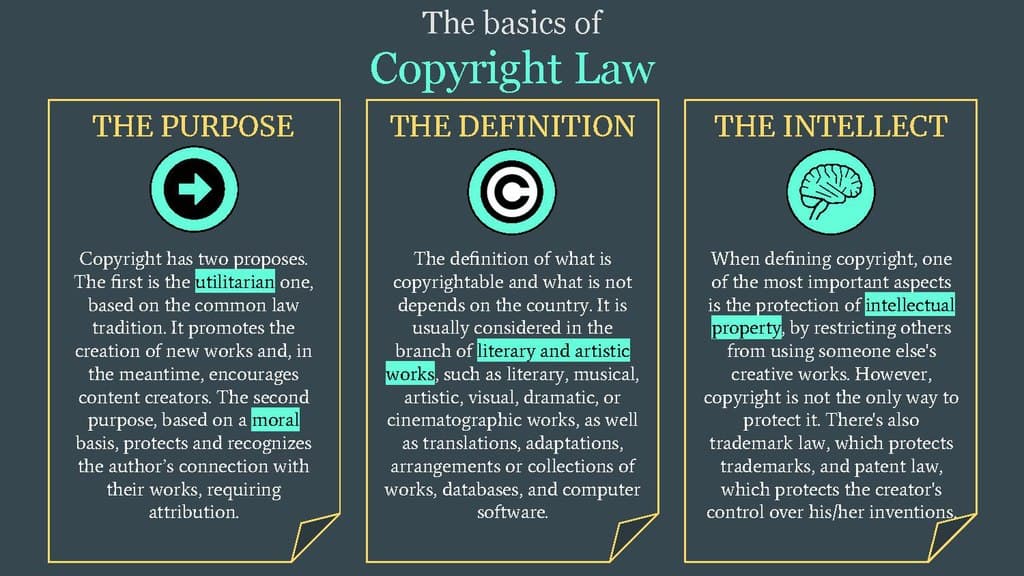
1. The Purpose and Foundations of Copyright Law
Copyright is a legal doctrine designed to protect the original creations of the mind—literary, artistic, musical, and other expressive works. It provides authors with exclusive rights over their creations for a limited time, including rights to reproduce, distribute, perform, and license their works. These protections aim to incentivize innovation, foster economic growth, and promote the dissemination of culture and knowledge.
The core requirements for copyright eligibility are typically:
- Originality: The work must be independently created and possess a minimal degree of creativity.
- Fixation: The work must be recorded in a tangible medium (e.g., canvas, paper, digital file).
- Authorship: A human author must have exercised creative control.
It is this last criterion—authorship—that lies at the center of the debate on AI-generated artworks. If a machine autonomously creates a painting, poem, or song, who is the “author”? Is it the machine itself, the programmer who built the AI, the user who provided prompts, or nobody at all?
2. The Rise of AI-Generated Art
Recent years have witnessed a surge in AI-generated artworks across media. Some notable examples include:
- “Edmond de Belamy” (2018): Created by the French art collective Obvious using a GAN (Generative Adversarial Network), this portrait sold for $432,500 at Christie’s, sparking public fascination and legal curiosity.
- GPT-4 and DALL·E-generated content: From poetry and prose to hyper-realistic images, AI tools can now produce content that is nearly indistinguishable from human-generated works.
- Music and film scores: AIVA, an AI composer, creates symphonies, while Amper Music enables users to generate royalty-free music in seconds.
These technologies raise fundamental questions about who, if anyone, owns the outputs. If AI can create commercially valuable works, should there be a legal mechanism to reward or control their use?
3. Arguments Against Copyright Protection for AI-Generated Art
Several compelling arguments exist for why AI-generated artworks should not be eligible for copyright protection:
a. Lack of Human Authorship
Copyright law is traditionally anthropocentric. Most jurisdictions—including the United States, United Kingdom, and European Union—require a human author. AI lacks consciousness, intention, and creativity in the human sense. It does not make choices with subjective intent, nor does it understand the cultural or emotional significance of its outputs.
For example, in the 2022 U.S. Copyright Office case involving Stephen Thaler’s AI system “Creativity Machine,” the office denied copyright for an AI-generated image, stating that “human authorship is a prerequisite.”
b. The Derivative Nature of AI Art
AI systems are trained on large datasets of existing works—paintings, songs, photos, novels—often without the explicit consent of the original creators. Critics argue that AI art is not truly original but a recombination or statistical interpolation of pre-existing content. Thus, granting it copyright could legitimize plagiarism or unfair appropriation.
c. Unfair Competitive Advantage
Allowing AI-generated works to be copyrighted may flood the market with low-cost, high-volume content, undermining human creators. If tech firms can secure copyrights for machine-generated content, it may tilt the balance of power away from individual artists and small creators, consolidating intellectual property in the hands of corporations.
d. Dilution of Creativity and Cultural Meaning
Many argue that the value of art lies not only in its aesthetics but in the story, struggle, and intention behind it. When a machine generates art without feeling, experience, or context, the cultural and philosophical dimensions of authorship may be lost. Protecting such works may devalue the human essence in creativity.
4. Arguments in Favor of Copyright for AI-Generated Art
Despite these concerns, there are also strong arguments for granting copyright—at least in some form—to AI-generated content.
a. Recognition of Human Involvement
In most cases, AI-generated content involves some level of human input. A person selects the dataset, engineers the algorithm, crafts the prompts, and curates the output. This process can involve significant creativity and skill. Proponents argue that if a photographer can receive copyright for choosing the frame and moment, a prompt engineer or AI artist should receive similar protection for designing effective prompts and refining outputs.
b. Encouragement of Innovation
Denying copyright protection may discourage investment in AI-based creativity. Startups, developers, and artists may be reluctant to build tools or publish works without the ability to protect and monetize their content. Copyright provides legal certainty that can foster innovation in emerging art forms.
c. Legal Precedents for Non-Human Agents
Historically, courts have allowed copyright in works created by non-traditional authors. For example, corporate entities can hold copyright even though they are not natural persons. Similarly, ghostwriters or anonymous authorship can still qualify for protection. These precedents suggest that strict human authorship might not be a necessary condition, particularly if a human is responsible for initiating or directing the creative process.
d. Policy-Based Exceptions
Some argue that if an AI-generated work meets all other criteria for copyright—originality, fixation, and creativity—it should not be excluded simply due to the tool used. The focus should be on the output, not the origin. After all, digital tools like Photoshop or music synthesizers also transform creative processes without disqualifying their users from copyright.
5. Comparative Legal Approaches
Countries around the world are grappling with this issue in different ways. Here’s a comparative overview:
a. United States
U.S. copyright law, under the Copyright Act of 1976, is explicit about human authorship. The Copyright Office has repeatedly denied registration for AI-generated works unless a human can demonstrate substantial creative input. The 2022 decision in Thaler v. Perlmutter reaffirmed this principle.
b. United Kingdom
The UK’s Copyright, Designs and Patents Act 1988 uniquely includes a provision that allows copyright for computer-generated works, where “there is no human author,” granting rights to “the person by whom the arrangements necessary for the creation of the work are undertaken.” This implies that the programmer, operator, or prompt engineer could claim ownership. However, this law predates modern AI and may be subject to reinterpretation.
c. European Union
The EU has not provided definitive legislation on AI authorship but generally aligns with the human-authorship requirement. However, several EU reports and white papers have explored the need for new frameworks to address the rise of autonomous creation.
d. China
China has taken a more flexible stance. Courts have granted copyright to AI-generated works where substantial human input is proven. This pragmatic approach reflects China’s interest in becoming a global AI leader and suggests a willingness to adapt traditional laws to new technologies.
e. India and Other Developing Countries
Many developing nations, including India, currently lack specific legal provisions for AI-generated content. However, legal scholars in these jurisdictions are increasingly advocating for adaptive reforms to ensure both protection and fairness in the digital era.
6. Proposed Solutions and Middle Grounds
Rather than a binary yes or no, some experts suggest nuanced approaches that balance the interests of creators, consumers, and society.
a. Tiered Protection Based on Human Involvement
Some propose a sliding scale of protection depending on the level of human contribution. For example:
- Full copyright if a human guides the process and curates the result;
- Limited protection for machine-generated content with minimal input;
- No protection for completely autonomous AI output.
This model rewards creative labor while acknowledging the evolving nature of art.
b. AI-Specific Intellectual Property Rights
Another option is to create a separate category of rights—akin to neighboring or related rights—for AI-generated works. These could offer more limited protections (e.g., shorter duration, fewer exclusive rights) while still enabling commercial use and attribution.
c. Mandatory Disclosure and Attribution
To ensure transparency, some advocate for laws requiring clear labeling of AI-generated content. This could help consumers distinguish between human- and AI-created works and promote informed consumption.
d. Open Licensing and Public Domain Solutions
Others argue that AI-generated content should automatically enter the public domain, or be distributed under open licenses like Creative Commons. This would promote access and avoid monopolization by large tech firms.
7. Ethical and Philosophical Considerations
Beyond legal frameworks, the question also touches on ethics, philosophy, and aesthetics.
a. The Nature of Authorship
If a human guides an AI to produce art, is that person an author, a curator, or a facilitator? Philosophers like Roland Barthes have long questioned the idea of a single, intentional author. Perhaps AI art invites us to rethink authorship as a networked, collaborative process.
b. Commodification of Culture
Granting copyright to AI-generated works risks turning creativity into a corporate commodity. Critics warn that without regulation, companies could flood cultural spaces with synthetic content, marginalizing human voices.
c. Cultural Bias and Algorithmic Inequality
AI systems often reflect the biases of their training data, which can perpetuate stereotypes or exclude non-Western artistic traditions. Granting copyright to such outputs without oversight may amplify cultural inequities.
8. Case Studies and Real-World Examples
Case Study 1: Obvious Collective and GAN Art
In 2018, the French art collective Obvious used a GAN model trained on portraits to create “Edmond de Belamy.” The artwork sold for a staggering sum, but its legitimacy was questioned. Obvious admitted using code from another developer (Robbie Barrat) without attribution. This case highlights both the commercial potential of AI art and the murky waters of authorship and ethics.
Case Study 2: Thaler’s Creativity Machine
Stephen Thaler, a vocal advocate for AI authorship, submitted various works created by his “Creativity Machine” to copyright offices worldwide. Most jurisdictions rejected the claims due to lack of human involvement, but Thaler’s lawsuits continue to shape global debate.
Case Study 3: YouTube and AI Music
Platforms like YouTube are flooded with AI-generated music mimicking famous artists. Labels and musicians have raised concerns about deepfakes and unauthorized use of their styles. Copyright law struggles to address whether such works infringe upon existing rights or deserve protection of their own.
9. The Future of Copyright in the AI Era
As AI becomes more sophisticated, the urgency to address these legal gaps will intensify. Some predicted developments include:
- Legislative reforms introducing hybrid or AI-specific rights.
- International treaties harmonizing rules across jurisdictions.
- Public debates on the cultural impact of synthetic media.
- Tech-legal collaborations for ethical data sourcing and transparent training.
Ultimately, the future of copyright in the AI era will depend not just on courts and lawmakers, but also on artists, audiences, and cultural values. Society must collectively decide what kinds of creativity we want to reward, protect, and promote.
Conclusion
The question of whether AI-generated artworks should be eligible for copyright protection is complex, multifaceted, and evolving. On one hand, the absence of human creativity challenges the philosophical and legal underpinnings of copyright. On the other hand, denying protection altogether may stifle innovation, ignore human involvement, and leave creators vulnerable to exploitation.
A balanced, nuanced approach—one that considers the degree of human input, the ethical implications of AI systems, and the broader cultural context—is essential. Rather than clinging to outdated definitions, copyright law must evolve to reflect the realities of digital creativity while safeguarding the principles of fairness, originality, and human dignity.
In this new era, the ultimate goal should not be to determine whether AI can create art, but rather how we as a society choose to value, regulate, and engage with the art that it produces.